 ClayTrace
Name the defect and photograph it in raking light
Take one overall shot and one close-up angled toward a window or studio lamp so surface texture shows clearly. Fine craze lines, tiny pinholes, and bare crawled spots disappear in flat overhead light.
Note whether the defect appears everywhere on the piece, only on the inside, only where two glazes overlapped, or only on one side facing the kiln elements.
| Defect | What you see | Details to record right away |
|---|---|---|
| Crazing | Fine network of cracks in the glaze surface | Clay body, glaze name, whether cracks appeared fresh from the kiln or days later |
| Crawling | Glaze pulls back leaving bare clay islands | Dust on bisqueware, coat thickness, drying time before firing, underglaze underneath |
| Pinholing or blistering | Tiny pits, craters, or popped bubbles | Clay body (especially dark or groggy clays), bisque cone, glaze thickness, firing hold or drop-and-soak |
| Running | Glaze flows down the wall or onto the shelf | Number of coats, overlap zone, distance left bare above the foot, peak cone and witness cone |
| Shivering | Glaze flakes off rims or sharp edges | Clay body, silica-heavy or tight-fitting glaze, sharp rim edges |
Separate application problems from clay and firing problems
Check whether another pot from the same firing with the same glaze came out clean. If one mug ran and another did not, look at coat count, dip time, specific gravity, or overlap height before blaming the kiln.
If every piece using one clay body pinholed across several glazes, look at bisque schedule, clay outgassing, or glaze-firing peak hold instead.
Change one variable on the follow-up test
Resist changing clay, glaze recipe, application thickness, and firing schedule at the same time. Pick one adjustment (such as wiping bisqueware with a damp sponge, dropping from three brushed coats to two, or leaving an extra half-inch unglazed above the foot) and link the test tile to the failed piece in your notes.
Keep the failed record in your log rather than deleting it. Checking past defects before glazing a fresh batch saves hours of studio time.
Sources and further reading
Keep defect photos beside the exact layers in ClayTrace
ClayTrace keeps every piece’s clay body, ordered glaze layers, coat counts, firing notes, and after-firing photos in one timeline. Open any glaze or clay in the Catalog to see past successes and failures together. Studio Pro adds Library Compare to inspect a failed piece beside a clean test side by side, plus Work Tags to group troubleshooting tests.
Free pottery journal · iPhone and Android · No account
See how ClayTrace works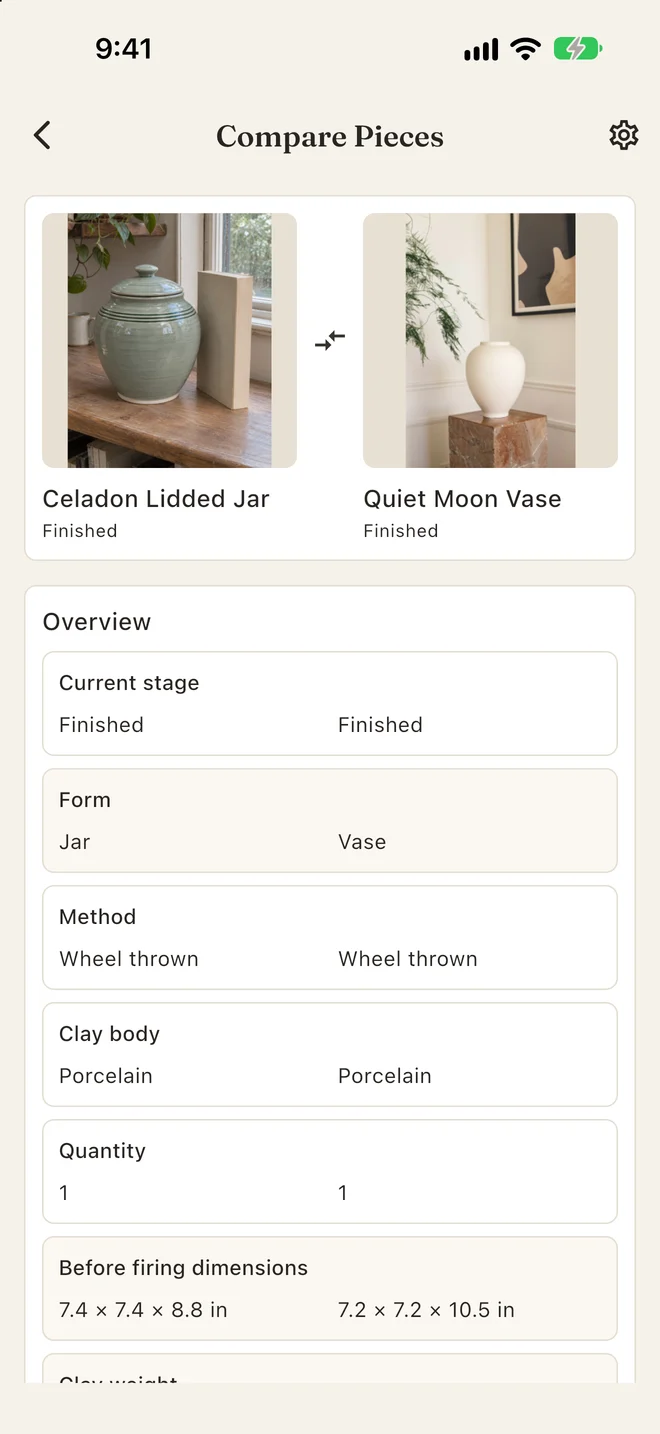
Questions
Why should I keep failed glaze tests in my pottery journal?
Failed tests tell you which layer order, coat count, or clay body caused running, crawling, or pinholing. Looking up a glaze in your log before reusing it prevents repeating the same mistake months later.
Does ClayTrace tell me whether a crazed pot is food safe?
No. ClayTrace records material labels and your own firing and surface notes, but it does not test or certify finished-piece food safety. Always follow glaze manufacturer instructions and studio testing standards.